About 36 minutes
How Lisa Loved the King — Background and Themes
Fantasy Juvenile Worlds
8,262 recorded words. 4 minutes difference from this book's estimate.
View Gutenberg source #20813
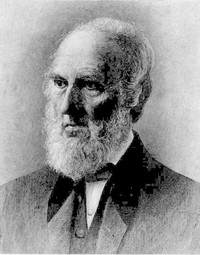
The catalog record for The Works of John Greenleaf Whittier, Complete — A Closer Reading provides practical reading context through 7,290 words, 32 min estimated reading time, and 13 detected text sections.
The text analysis averages about 10.0 words per sentence, while the detected sections provide another way to judge how the source is divided.
Project Gutenberg metadata also associates the work with “American literature,” connecting these edition facts with the source record’s subject description.
Explore this collection
These alternatives are selected using recorded categories and estimated reading time.
About 36 minutes
Fantasy Juvenile Worlds
8,262 recorded words. 4 minutes difference from this book's estimate.
View Gutenberg source #20813About 26 minutes
Fantasy Juvenile Worlds
5,977 recorded words. 6 minutes difference from this book's estimate.
View Gutenberg source #20123About 39 minutes
Fantasy Juvenile Worlds
8,918 recorded words. 7 minutes difference from this book's estimate.
View Gutenberg source #13974Search stored excerpts and compare books → Choose by your preferences →
Choices use stored catalog measurements. Estimates vary with reading speed. A shared category is a catalog label, not a claim that two books have the same argument or literary quality.
Search reads excerpt text stored with this catalog and links to its associated Gutenberg record. The connection is stored in the site database; this tool does not recheck that every excerpt is word-for-word identical to that external record. Excerpt search does not cover every chapter and does not verify historical publication dates.
Catalog snapshot checked: 2026-09-26. Coverage: 99 public books, 99 available source excerpts.
Calculated from edition completeness, EPUB availability, text structure and catalogue metadata. Not a user rating.
Total of 100 points, scaled to a 2.5-5.0 range. Editions with an empty description or a missing EPUB file are not scored.
Public-domain source text
The source text is kept in the dedicated reader, separate from this catalogue record and its commentary.
The index to this complete edition reveals a poet deeply engaged with his own legacy. The publishers' advertisement notes that Whittier personally re-arranged and revised his works, supplying head-notes on the subject and occasion of certain poems. This editorial involvement suggests a careful curation of voice and tone across the seven volumes. The index itself, with its dense lists of titles, offers a map of Whittier's shifting concerns—from narrative and legendary poems to anti-slavery works, personal poems, and historical papers. The sheer variety hints at changes in pace and subject matter, though the excerpts provide only the skeleton of the collection.
The publishers' advertisement emphasizes that Whittier himself re-arranged and revised the contents, with his cooperation ensuring a “comprehensive and well-adjusted” collection. This is not a posthumous compilation but a living author's attempt to shape his own literary record. The inclusion of early poems, previously discarded, in an appendix suggests a desire for completeness and a willingness to let readers trace his development. The head-notes, described as brief, add a layer of personal commentary that may alter the reading experience—offering context that can slow or redirect the pace of engagement. Without access to these notes, one can only speculate on how they modulate the voice, but their presence signals a deliberate authorial hand.
The detailed contents list, spanning multiple volumes, creates a rhythm of its own. Volume I opens with “Narrative and Legendary Poems,” suggesting a slower, story-driven pace, while Volume II shifts to “Poems of Nature” and “Religious Poems,” which may invite more meditative reading. Volume III's “Anti-Slavery Poems” and “Songs of Labor and Reform” likely quicken the tempo with urgent, political language. The index entries themselves vary in length—some titles are single words (“Ego,” “Help”), others are phrases (“The Female Martyr,” “Funeral Tree of the Sokokis”). This variation mirrors the poet's own shifts between concise epigrams and extended narratives. The alphabetical listing of poems in the latter part of the excerpt further fragments the reading experience, juxtaposing disparate themes in quick succession.
Whittier's voice, as hinted by the titles, adapts to genre. The narrative poems often carry place names (Pentucket, The Norsemen) and legendary figures, suggesting a formal, almost bardic tone. In contrast, the anti-slavery poems (“Hunters of Men,” “Massachusetts to Virginia”) likely adopt a more direct, polemical voice. The personal poems (“My Birthday,” “In School-Days”) may shift to a quieter, reflective register. The index also includes prose works—Margaret Smith's Journal and historical papers—which would introduce yet another narrative mode. This generic range implies that the reader's experience of pace and voice will vary significantly from volume to volume, and even within a single volume, as Whittier moves between lyrical, narrative, and argumentative modes.
Readers approaching this complete edition should be prepared for a varied journey. The index serves as a useful guide, allowing one to select poems or prose pieces according to mood or interest. Pay attention to the head-notes, which may offer clues to Whittier's own perspective on his work. The collection rewards those who dip in and out, sampling different voices and paces, rather than reading straight through.
I’ve often lingered over the index of Whittier’s Works, tracing his careful revisions like an old friend’s faded marginalia. There is a quiet kinship in that patient attention to phrasing, the same solemn care I find in Beechenbrook A Rhyme of the War — A Reader’s Guide, where every measured line seems to hold its breath, remembering. Both whisper of words chosen in sorrow, not haste.
Capture what you thought, learned, and would like to remember.