About 39 minutes
The Last West; and, Paolo's Virginia — Inside the Classic
Fantasy Juvenile Worlds
8,918 recorded words. 3 minutes difference from this book's estimate.
View Gutenberg source #13974
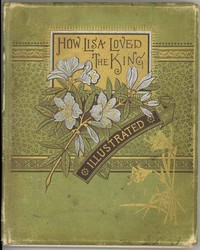
How Lisa Loved the King — Background and Themes can be approached with a clearer sense of reading commitment from its source measurements: 8,262 words, 36 min estimated reading time, and 1 detected text section.
The text analysis averages about 33.7 words per sentence, while the detected sections provide another way to judge how the source is divided.
Project Gutenberg metadata also associates the work with “Poetry,” connecting these edition facts with the source record’s subject description.
Explore this collection
These alternatives are selected using recorded categories and estimated reading time.
About 39 minutes
Fantasy Juvenile Worlds
8,918 recorded words. 3 minutes difference from this book's estimate.
View Gutenberg source #13974About 32 minutes
Fantasy Juvenile Worlds
7,290 recorded words. 4 minutes difference from this book's estimate.
View Gutenberg source #9600About 43 minutes
Fantasy Juvenile Worlds
9,859 recorded words. 7 minutes difference from this book's estimate.
View Gutenberg source #7889Search stored excerpts and compare books → Choose by your preferences →
Choices use stored catalog measurements. Estimates vary with reading speed. A shared category is a catalog label, not a claim that two books have the same argument or literary quality.
Search reads excerpt text stored with this catalog and links to its associated Gutenberg record. The connection is stored in the site database; this tool does not recheck that every excerpt is word-for-word identical to that external record. Excerpt search does not cover every chapter and does not verify historical publication dates.
Catalog snapshot checked: 2026-09-26. Coverage: 99 public books, 99 available source excerpts.
Calculated from edition completeness, EPUB availability, text structure and catalogue metadata. Not a user rating.
Total of 100 points, scaled to a 2.5-5.0 range. Editions with an empty description or a missing EPUB file are not scored.
Public-domain source text
The source text is kept in the dedicated reader, separate from this catalogue record and its commentary.
George Eliot's How Lisa Loved the King opens with a dense, simile-laden description of 13th-century Europe, where the aftermath of the Sicilian Vespers sets the stage for a tournament in Palermo. The poem's voice is conspicuously ornate, comparing the king's horse to a 'full-gemmed ring' and his face to 'the opened eyes of a loved sleeper.' This lavish style immediately signals that the work is less a straightforward narrative than a sustained meditation on the nature of ideal love and chivalric virtue.
The excerpts reveal a tension between the public spectacle of courtly life—the 'mock terror of the tournament'—and the private, almost religious intensity of Lisa's devotion. Eliot frames her protagonist's love as a form of worship, using language that echoes Dante's spiritual longing, yet grounds it in the specific social constraints of a merchant's daughter in a royal court.
The poem's central dynamic is the transformation of romantic desire into a quasi-religious sentiment. Lisa's love is described as 'the deep mysterious glow, / The impregnation with supernal fire / Of young ideal love, transformed desire.' Eliot repeatedly uses the language of worship: Lisa's soul 'worshipped' the king 'as far seraphim / Worship the distant glory.' This is not mere hyperbole; it establishes a framework where Lisa's love becomes an act of devotion that requires no reciprocation. The king, upon learning of her feelings, treats them with the gravity of a sacred trust, confiding in his queen and arranging a visit that honors Lisa without compromising her modesty.
This architecture of devotion is reinforced by the poem's structure. The narrative moves from the public tournament to the private sickroom, then back to a garden celebration, each space carefully calibrated to reflect the social and emotional stakes. The garden scene, with its 'lake of splendor 'mid the aloes gray,' becomes a stage where the court performs its recognition of Lisa's worth, yet the true drama remains internal.
Eliot embeds a subtle critique of class and commerce within the chivalric surface. Lisa is 'of no noble line, / Child of Bernardo, a rich Florentine' who trades in drugs. Her father's wealth is earned, not inherited, and the poem notes that he 'had the virtue not to try and sell / Drugs that had none'—a pointed contrast to the moral compromises of trade. The proposed match with Perdicone, a nobleman of higher birth but lower fortune, reflects the 'mixture fair / Of blood that hurries' that traders seek to elevate their status.
This economic subtext complicates the idealization of courtly love. Lisa's love for the king is presented as pure and selfless, yet it is also a form of social aspiration, albeit one she renounces. When she tells the king she was 'too weak to bear the yoke, / The golden yoke, of thoughts too great for me,' she acknowledges the gap between her station and her desires. The king's response—recognizing that he 'had lost much honor, honoring less / That message of her passionate distress'—suggests that true nobility lies in recognizing the value of a sincere heart, regardless of rank.
Eliot's verse is characterized by a deliberate tension between excess and control. The opening lines are almost baroque in their accumulation of botanical imagery: 'flowers hand-planted and of flowers air-sown, / Climbing and trailing, budding and full-blown.' Yet this profusion is carefully ordered by the rhyme scheme and the steady iambic pentameter. The poem's formal discipline mirrors the emotional restraint that Lisa must exercise.
This restraint is most evident in the scenes of direct address. When Lisa finally speaks to the king, her words are brief and veiled: 'Signor, I was too weak to bear the yoke...' The king alone 'perceived the covert sense / Of all her words,' suggesting that true communication occurs beneath the surface of polite speech. The poem's resolution—Lisa's contentment with 'the life of grateful sentiment'—is not a surrender but a transformation of desire into a sustainable, interior joy. The final image of Lisa as a 'white dove before the gorgeous brood' of courtiers encapsulates this poetics of restraint: she is both part of the scene and set apart, her purity a silent rebuke to the splendor around her.
Readers approaching How Lisa Loved the King should attend to the interplay between the poem's lavish surface and its quiet, almost austere core. Eliot's use of simile and metaphor is not decorative but functional, creating a world where every gesture carries moral weight. The poem rewards careful reading of its formal choices—the enjambments, the shifts in diction—as much as its plot. Consider how the verse itself enacts the tension between public display and private truth, and how the resolution, in its refusal of dramatic climax, offers a subtle redefinition of what constitutes a happy ending.
The rain tapped our window as I finished Eliot’s ornate verses on Lisa’s quiet dignity, that careful balance between wanting and letting go. Later, rummaging for a bookmark, I found an old paperback of war songs, their plain refrains oddly complementary—not opposing, just another kind of private honor written in public form. With the Colors Songs of the American Service — Reading Notes stayed beside the poem all afternoon.
Create a short personal record of your experience with this book.