About 19 minutes
An Heroic Epistle to the Right Honourable the Lord Craven (3rd Ed.) — Context and Discussion
Adventure Picaresque Fiction
4,323 recorded words. 4 minutes difference from this book's estimate.
View Gutenberg source #22490
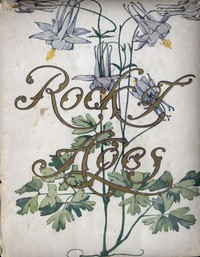
The catalog record for Rock of Ages — Reading Notes provides practical reading context through 3,225 words, 15 min estimated reading time, and 1 detected text section.
The text analysis averages about 26.2 words per sentence, while the detected sections provide another way to judge how the source is divided.
Project Gutenberg metadata also associates the work with “Christian poetry,” connecting these edition facts with the source record’s subject description.
Explore this collection
These alternatives are selected using recorded categories and estimated reading time.
About 19 minutes
Adventure Picaresque Fiction
4,323 recorded words. 4 minutes difference from this book's estimate.
View Gutenberg source #22490About 24 minutes
Adventure Picaresque Fiction
5,389 recorded words. 9 minutes difference from this book's estimate.
View Gutenberg source #20181About 27 minutes
Adventure Picaresque Fiction
6,023 recorded words. 12 minutes difference from this book's estimate.
View Gutenberg source #22289Search stored excerpts and compare books → Choose by your preferences →
Choices use stored catalog measurements. Estimates vary with reading speed. A shared category is a catalog label, not a claim that two books have the same argument or literary quality.
Search reads excerpt text stored with this catalog and links to its associated Gutenberg record. The connection is stored in the site database; this tool does not recheck that every excerpt is word-for-word identical to that external record. Excerpt search does not cover every chapter and does not verify historical publication dates.
Catalog snapshot checked: 2026-09-26. Coverage: 99 public books, 99 available source excerpts.
Calculated from edition completeness, EPUB availability, text structure and catalogue metadata. Not a user rating.
Total of 100 points, scaled to a 2.5-5.0 range. Editions with an empty description or a missing EPUB file are not scored.
Public-domain source text
The source text is kept in the dedicated reader, separate from this catalogue record and its commentary.
The Project Gutenberg e-text of Rock of Ages consists almost entirely of the legal and licensing apparatus required for distribution, with the actual hymn text occupying a very small portion. The work is attributed to Augustus Toplady (1740–1778) and is dated 1909 by the publisher Cupples & Leon Company. The catalog subject 'Christian poetry' accurately describes the content, but the primary category 'Adventure & Picaresque Fiction' is a mismatch—this is a devotional hymn, not a narrative adventure.
The hymn consists of four stanzas, each following an AABCCB rhyme scheme. The opening line, 'Rock of ages cleft for me,' establishes the central metaphor of Christ as a refuge. The second stanza introduces a contrast between human effort ('labors of my hands') and divine grace, with the line 'Thou must save, and Thou alone' emphasizing sola fide. The third stanza shifts to a series of antitheses: 'Naked, come to Thee for dress; / Helpless look to Thee for grace; / Foul, I to the fountain fly.' The final stanza extends the plea beyond death, envisioning the judgment throne. The repeated refrain 'Rock of ages, cleft for me, / Let me hide myself in thee' bookends the poem.
The hymn draws on biblical language, notably the epigraph from 2 Samuel 22:2: 'The Lord is my rock and my fortress.' The phrase 'water and blood' from Christ's side references John 19:34, and 'double cure' suggests both justification and sanctification. The line 'While I draw this fleeting breath' echoes Job's language of transience. The vocabulary is consistently penitential: 'guilt,' 'power,' 'sin,' 'atonement,' 'grace.' The poem's theology is explicitly substitutionary—Christ's atonement is the sole ground of salvation, with no room for human merit.
The e-text is derived from a 1909 edition published by Cupples & Leon Company, New York. The hymn itself was written by Toplady in the 18th century, but this edition includes a copyright notice, indicating it was still under U.S. copyright at the time of digitization. The Project Gutenberg record lists the release date as November 17, 2008, with a word count of 3,225—nearly all of which is the license text. The actual hymn is only about 200 words. The catalog subject 'Christian poetry' is accurate, but the 'Adventure & Picaresque Fiction' category appears to be a cataloging error.
The mismatch between the catalog categories and the actual content is striking. A reader expecting adventure fiction will find only a short hymn. The extensive licensing text, while necessary for legal distribution, dominates the file. The hymn itself is a tightly structured devotional poem with clear theological commitments. The 1909 edition's copyright notice suggests that later editions may have included additional material, but the e-text contains only the hymn and legal boilerplate.
Readers interested in the hymn's textual history should note that this e-text preserves the 1909 edition's typography and layout, including the epigraph and attribution. The brevity of the actual poem makes it suitable for quick reference, but those seeking a critical edition or historical context will need supplementary sources. The cataloging anomaly serves as a reminder to verify subject headings against actual content.
I remember humming “Rock of Ages” during a long train ride, the steady rhythm of the wheels matching its quiet plea. It felt less like doctrine and more like a hand held out in the dark. That same hush came over me years later with The Light of Asia — Themes and Context, where devotion spoke in gentler, winding tones. Both felt like resting places, not arguments.
Create a short personal record of your experience with this book.