About 64 minutes
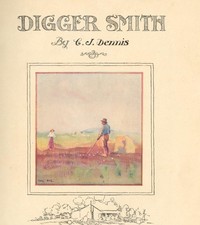
Digger Smith — Background and Themes
Adventure Picaresque Fiction
14,582 recorded words. 13 minutes difference from this book's estimate.
View Gutenberg source #15524
The source record for Lyrics of Earth — Text and Context measures this digital text at 11,646 words, 51 min estimated reading time, and 3 detected text sections.
The text analysis averages about 36.5 words per sentence, while the detected sections provide another way to judge how the source is divided.
Project Gutenberg metadata also associates the work with “Poetry,” connecting these edition facts with the source record’s subject description.
Explore this collection
These alternatives are selected using recorded categories and estimated reading time.
About 64 minutes
Adventure Picaresque Fiction
14,582 recorded words. 13 minutes difference from this book's estimate.
View Gutenberg source #15524About 66 minutes
Adventure Picaresque Fiction
15,148 recorded words. 15 minutes difference from this book's estimate.
View Gutenberg source #17898About 27 minutes
Adventure Picaresque Fiction
6,023 recorded words. 24 minutes difference from this book's estimate.
View Gutenberg source #22289Search stored excerpts and compare books → Choose by your preferences →
Choices use stored catalog measurements. Estimates vary with reading speed. A shared category is a catalog label, not a claim that two books have the same argument or literary quality.
Search reads excerpt text stored with this catalog and links to its associated Gutenberg record. The connection is stored in the site database; this tool does not recheck that every excerpt is word-for-word identical to that external record. Excerpt search does not cover every chapter and does not verify historical publication dates.
Catalog snapshot checked: 2026-09-26. Coverage: 99 public books, 99 available source excerpts.
Calculated from edition completeness, EPUB availability, text structure and catalogue metadata. Not a user rating.
Total of 100 points, scaled to a 2.5-5.0 range. Editions with an empty description or a missing EPUB file are not scored.
Public-domain source text
The source text is kept in the dedicated reader, separate from this catalogue record and its commentary.
Archibald Lampman's Lyrics of Earth (1895) opens with a poem that stages a dialogue between the speaker and the natural world: 'Why are ye all so happy?' The meadow, roses, shadow, and brooklet each reply with the same refrain—'We dream, and are bright and happy, / But we cannot answer why.' This repeated answer establishes a central tension: nature's contentment is instinctive, not reasoned, and the speaker's own happiness is equally mysterious. The collection's voice moves from this buoyant inquiry to more subdued tones, as in 'In November,' where mulleins become 'a silent and forsaken brood' of 'hermit folk.' Lampman's language is precise and sensory, favoring concrete images over abstraction.
The narrative voice in Lyrics of Earth oscillates between wonder and resignation. In 'The Sweetness of Life,' the speaker addresses natural elements directly, anthropomorphizing them with a childlike curiosity. Yet the poem ends with a detached self-interrogation: 'Thou art born as the flowers, and wilt linger / Thine own short space and die.' This shift from exuberance to philosophical calm recurs throughout. In 'God-speed to the Snow,' the tone is affectionate and imperative—'Haste thee, speed thee, O kind snow'—while 'An Autumn Landscape' adopts a more observational stance, describing a 'ploughman urges his dull team' with 'furious cries.' The voice rarely judges; it records and reflects, allowing the landscape to speak through its own details.
The collection is organized not by narrative but by seasonal progression, from spring's 'April in the Hills' through summer's 'June' to autumn's 'An Autumn Landscape' and winter's 'Snow.' Each poem functions as a discrete lyric moment, yet together they create a cumulative rhythm of growth, fullness, decay, and dormancy. Lampman often uses a consistent stanza form—quatrains or sestets with regular rhyme—but varies line length to mimic natural cadences. In 'The Meadow,' long, flowing lines evoke open space: 'What sayest thou, Oh meadow, / That stretches so wide, so far.' In contrast, 'In November' employs shorter, tighter lines to convey the 'bleak and sandy spot' and its 'haggard' mulleins. This structural flexibility mirrors the changing pace of the seasons themselves.
Certain images recur across the collection, creating a cohesive sensory world. 'Gray' appears repeatedly—'gray stones,' 'gray figures,' 'gray goldfinches'—often paired with 'still' or 'silent.' The color palette is muted: 'blue-gray,' 'pale greenish,' 'silver.' Lampman frequently notes the quality of light: 'the sunlit summit,' 'the fathomless daylight seems to stand and dream.' He also attends to sound—or its absence. In 'An Autumn Landscape,' 'No wind there is that either pipes or moans,' while 'the river, curling softly by, / Whispers and dimples.' These details ground the poems in a specific, northern landscape. The poet's role, as stated in 'The Poet's Possession,' is to produce 'a second tilth and second harvest' from the farmer's fields—an imaginative reaping of 'images and curious thoughts.'
Readers approaching Lyrics of Earth will find a consistent, meditative voice that treats nature not as a backdrop but as a conversation partner. Lampman's poems reward attention to small shifts in tone and image—the way a 'long clean shadow' or a 'silken thistle' can carry emotional weight. Because the excerpts are incomplete, the full arc of the collection remains unknown, but the available poems suggest a deliberate, quiet artistry. Reading them in sequence may reveal how Lampman's seasonal structure deepens the interplay between joy and transience.
That afternoon, rain blurred the window while Lampman’s verses traced the same grey stillness, his joy undercut by melancholy—a mood that lingered as I shelved the book. My hand drifted to An Heroic Epistle to the Right Honourable the Lord Craven (3rd Ed.) — Context and Discussion, its dry, ironic tone somehow answering the weather’s quiet complaint with a different, older kind of restraint. Just a moment’s accident. It stayed with me.
Create a short personal record of your experience with this book.