About 132 minutes
The Seven Seas — Edition Insights
Adventure Picaresque Fiction
30,252 recorded words. 20 minutes difference from this book's estimate.
View Gutenberg source #27870
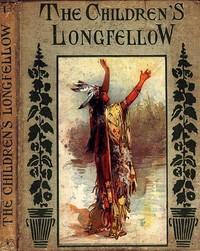
This digital edition of The Children's Longfellow Told in Prose — Context and Discussion is described by source-level measurements including 25,681 words, 1 hr 52 min estimated reading time, and 4 detected text sections.
The text analysis averages about 25.3 words per sentence, while the detected sections provide another way to judge how the source is divided.
Project Gutenberg metadata also associates the work with “American poetry -- Adaptations,” connecting these edition facts with the source record’s subject description.
Explore this collection
These alternatives are selected using recorded categories and estimated reading time.
About 132 minutes
Adventure Picaresque Fiction
30,252 recorded words. 20 minutes difference from this book's estimate.
View Gutenberg source #27870About 135 minutes
Adventure Picaresque Fiction
31,012 recorded words. 23 minutes difference from this book's estimate.
View Gutenberg source #20956About 80 minutes
Adventure Picaresque Fiction
18,359 recorded words. 32 minutes difference from this book's estimate.
View Gutenberg source #26398Search stored excerpts and compare books → Choose by your preferences →
Choices use stored catalog measurements. Estimates vary with reading speed. A shared category is a catalog label, not a claim that two books have the same argument or literary quality.
Search reads excerpt text stored with this catalog and links to its associated Gutenberg record. The connection is stored in the site database; this tool does not recheck that every excerpt is word-for-word identical to that external record. Excerpt search does not cover every chapter and does not verify historical publication dates.
Catalog snapshot checked: 2026-09-26. Coverage: 99 public books, 99 available source excerpts.
Calculated from edition completeness, EPUB availability, text structure and catalogue metadata. Not a user rating.
Total of 100 points, scaled to a 2.5-5.0 range. Editions with an empty description or a missing EPUB file are not scored.
Public-domain source text
The source text is kept in the dedicated reader, separate from this catalogue record and its commentary.
Doris Hayman's prose retellings of Longfellow's narrative poems open with a direct appeal to young readers: the forge of the Village Blacksmith really stood beneath a 'spreading chestnut tree' in Cambridge, and when the tree was cut down, schoolchildren bought the wood to make the poet a chair. This anecdote, drawn from the introduction, establishes Hayman's method—she grounds each story in a concrete, often local, reality before unfolding the tale. Her prose simplifies Longfellow's verse without stripping away its historical or legendary texture, as when she notes that Hiawatha 'was supposed to be a person of miraculous birth' sent by the Great Spirit, or that the Golden Legend derives from a German Minnesinger's poem. The adaptations preserve the original plots and settings, but Hayman's own voice emerges in explanatory asides and descriptive expansions that clarify customs and landscapes for a child audience.
Hayman frequently amplifies Longfellow's settings with sensory details not present in the verse. In 'Lady Wentworth,' she describes the governor's mansion: 'Within, it was magnificent to behold with its oak floors and carved chimney-pieces. All through the winter immense fires of logs blazed cheerily on the open hearths, while portraits of dead and gone Wentworths in heavy gilt frames looked placidly down from the tapestry-covered walls.' This passage adds a layer of domestic opulence that Longfellow's poem only suggests. Similarly, in 'Elizabeth,' the Quaker maiden remarks on the American landscape: 'In the old country there is a long twilight, but here in the forest is hardly a moment between daylight and lamplight.' Hayman uses such contrasts to highlight the strangeness of the New World to European settlers, a theme she reinforces through dialogue and descriptive asides.
Hayman often invents or expands dialogue to reveal character, especially in moments of social tension. In 'Lady Wentworth,' the governor's wedding command is rendered through direct speech: 'This is my birthday; it shall also be my wedding-day, and you shall marry me.' When the rector hesitates, the governor insists, 'If you hesitate to do as I ask you, then, as chief magistrate, I command you.' This exchange, drawn from Longfellow's original, is given added weight by Hayman's framing—she notes the rector's 'loud, clear tones' and the bride's 'blushing and confused' demeanor. In 'Elizabeth,' the housemaid Hannah's complaint about the Delaware River—'Here we see nothing but pine-trees already flecked with snow'—contrasts with Elizabeth's appreciation of winter's 'spotless mantle of snow,' establishing a tension between homesickness and wonder that runs through several tales.
Hayman organizes her collection by grouping poems under thematic or structural headings. Five stories are taken from Longfellow's 'Tales of a Wayside Inn,' a series 'whose plan was evidently suggested by the Canterbury Tales,' as she notes in the introduction. This framing invites readers to see the tales as linked narratives, though Hayman does not preserve the inn's frame story. She also selects poems that feature strong, often romantic plots—'The Courtship of Miles Standish,' 'Evangeline,' 'The Falcon of Ser Federigo'—and omits shorter lyrics. The result is a collection weighted toward adventure and romance, with each story prefaced by a brief historical or legendary note. For instance, she explains that Hiawatha 'was known among the different tribes under various names' and was 'a person of miraculous birth,' a detail that orients young readers without overwhelming them.
Hayman's prose style oscillates between formal exposition and colloquial storytelling. In 'The Building of the Ship,' she begins with a historical overview: 'It was in bygone days, long before the use of steam was even thought about; trains were unknown, and when people wished to get from one part of the country to another they were obliged to make the journey on horseback or in coaches.' This explanatory tone gives way to more vivid passages, as when she describes a sailing ship's 'charm' that 'no steamer with all its complicated machinery can replace.' She occasionally retains Longfellow's own phrasing, such as the line about Martha Hilton: 'A maid of all work, whether coarse or fine, / A servant who made service seem divine.' These quoted fragments, never more than eight words, serve as touchstones for the original verse while allowing Hayman's prose to carry the narrative.
Readers approaching this edition should note that Hayman's adaptations are not abridgments but full prose retellings, each with its own descriptive texture and explanatory asides. The collection offers a consistent entry point into Longfellow's narrative world, though the prose inevitably flattens the metrical and rhythmic effects of the verse. Comparing Hayman's versions with the original poems can illuminate how she chooses to expand or compress scenes, and which details she considers essential for a young audience. The book is best read as a companion to Longfellow, not a substitute.
I remember sitting with my grandmother, her finger tracing Longfellow’s lines as she turned them into stories for me. The Children’s Longfellow brought that warmth back, the way prose can hold a poem’s pulse without its meter. It reminded me of slipping through The Poetical Works of Henry Kirk White : With a Memoir by Sir Harris Nicolas — A Closer Reading, that same quiet ache of discovering a voice made gentler by retelling. Both felt like finding old letters, slightly faded but still breathing.
Create a short personal record of your experience with this book.