
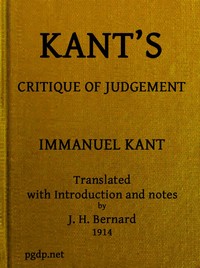
Kant's Critique of Judgement by Immanuel Kant
Let's be clear from the start: this is not a novel. There's no protagonist, no villain, and the only 'action' is the movement of ideas. But if we treat it like a story, it's the story of a big, ambitious project. Kant had already written two massive books trying to map out how we know things (science) and how we should act (morality). This book, the 'Critique of Judgement,' is his third act. He's trying to connect those two separate worlds.
The Story
The book is split into two main parts. The first part tackles our sense of beauty and art. Kant asks: when we say something is beautiful, what are we really saying? He argues it's a special kind of judgement that's personal but feels universal. We don't *prove* a sunset is beautiful; we feel it, and we expect others to agree. The second part deals with 'teleology'—the idea of purpose in nature. He looks at things like a tree growing or an eye seeing and wonders if we can talk about them as if they were designed for a purpose, even if we don't believe in a literal designer. The whole book is his effort to build a bridge between the world of science (which is all cause and effect) and the world of human experience (which is full of beauty, purpose, and meaning).
Why You Should Read It
I'll be honest, it's a tough read. Kant's sentences are famously long and dense. But the ideas are worth the effort. Reading this book is like getting a masterclass in how to think about your own reactions to the world. It gives you a vocabulary for that feeling you get listening to your favorite song or walking through a forest. It makes you realize that your sense of wonder isn't just a fluke—it's a fundamental part of being human. It helped me see that my appreciation for a cleverly designed tool and my awe at a mountain range might be coming from the same place in my mind.
Final Verdict
This book is not for everyone. If you're looking for a breezy weekend read, look elsewhere. But if you're a curious person who enjoys big questions about art, nature, and what it means to be human, it's a foundational text. It's perfect for artists wondering about the basis of taste, for scientists pondering the philosophy of their field, or for any thoughtful reader who wants to understand one of the deepest attempts to explain how we find beauty and purpose in our lives. Pair it with a good cup of coffee and plenty of patience.
This publication is available for unrestricted use. Enjoy reading and sharing without restrictions.
Oliver Williams
7 months agoGood quality content.
Margaret Torres
1 year agoI didn't expect much, but it manages to explain difficult concepts in plain English. This story will stay with me.
Ava Wright
1 year agoNot bad at all.
Emma Davis
1 year agoThe formatting on this digital edition is flawless.

Thomas Smith
4 months agoA must-have for graduate-level students in this discipline.