
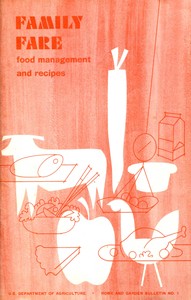
Family fare : food management and recipes
On the surface, 'Family Fare: Food Management and Recipes' is exactly what it says it is: a practical guide. It walks you through budgeting for groceries, planning weekly menus to avoid waste, and executing reliable, economical recipes. It's the kind of book that would have been a staple in a 1950s homemaker's kitchen, full of sensible advice about stretching a dollar and feeding a family.
The Story
But there is no named author, and that's the first clue. This 'manual' is actually the life's work of a fictional home economist, presented as if we've found her professional papers. The 'story' unfolds through her clinical prose. As she methodically outlines how to organize a pantry or prepare a cheap cut of meat, her own voice—stressed, meticulous, trapped—begins to bleed through. You see it in the obsessive repetition of certain rules, in the abrupt, almost desperate switches from recipe to budgeting tip. The plot is the slow realization that this guide to domestic bliss is a document of profound personal containment. The central drama is silent: the conflict between her public role as an architect of the perfect home and her private reality, which the book only lets us guess at.
Why You Should Read It
I picked this up expecting a quirky, vintage cookbook and got something much deeper. It’s incredibly smart in how it tells a story without ever seeming to. You become an archaeologist, sifting through instructions for 'Mock Apple Pie' (made with crackers!) to find the human being underneath. It made me think about all the invisible labor that goes into keeping a family afloat, and how that work has historically defined—and confined—women. It’s not a sad book, exactly. It's more like a quiet act of witness. You finish it feeling like you've met someone remarkable, and you're left to wonder about all the other 'unknown' authors whose stories are tucked away in plain sight.
Final Verdict
This is a hidden gem for readers who love character studies where the character is revealed through their work. If you enjoyed the subtle tension in novels like Mrs. Bridge or the quiet power of found-document narratives, you'll be fascinated. It’s also perfect for anyone interested in mid-century social history, food history, or just a brilliantly unconventional story. Don't go in looking for a traditional plot. Go in ready to read between the lines. You'll be rewarded with a portrait that is surprisingly moving and unforgettable.
This book is widely considered to be in the public domain. It serves as a testament to our shared literary heritage.
William Taylor
1 year agoA must-have for graduate-level students in this discipline.
Deborah Hernandez
1 year agoFast paced, good book.
Edward Martin
1 year agoI didn't expect much, but the character development leaves a lasting impact. Exactly what I needed.
Kimberly Jackson
10 months agoI started reading out of curiosity and the plot twists are genuinely surprising. Exceeded all my expectations.



Richard Perez
1 year agoI appreciate how this edition approaches the core problem, the step-by-step breakdown of the methodology is extremely helpful for students. A perfect balance of theory and practical advice.