
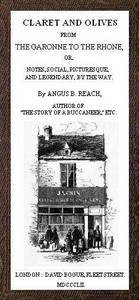
Claret and Olives, from the Garonne to the Rhone by Angus B. Reach
Published in 1852, Claret and Olives is the lively account of Angus B. Reach's journey through southern France. He was a writer for the popular Illustrated London News, and his mission was straightforward: report on the life, landscapes, and—crucially—the food and drink of the region connecting the Garonne and Rhone rivers. Think of it as a long-form magazine feature from the age of stagecoaches and steamboats.
The Story
The book follows Reach's route from the claret (Bordeaux wine) country in the west to the olive groves of Provence in the east. He describes bustling ports, sleepy villages, and dramatic mountain passes. He meets a whole cast of characters: vintners worrying about their harvest, fishermen mending their nets, and innkeepers serving up incredible local dishes. But woven into these charming scenes is a persistent thread of recent history. The 1848 Revolution, which toppled a king and established a short-lived republic, had just happened. Reach is constantly asking people what they think, who they support, and how their lives have changed. The 'story' is really his attempt to take the temperature of a nation in recovery, all while faithfully documenting the price of a bottle of wine or the taste of a bouillabaisse.
Why You Should Read It
What makes this book special is Reach's voice. He's not a distant historian; he's a curious, sometimes cheeky observer who gets excited about a good market and frustrated by a bad road. His descriptions are vivid and often hilarious. You feel like you're right there with him, bouncing along in a carriage, smelling the herbs in the hills, or trying to communicate with a local using broken French and hand gestures. He has a great eye for the little details that make a place real. Reading it today, it's a fascinating double portrait: a snapshot of mid-19th century France, but also a glimpse into how a clever Victorian Englishman saw his continental neighbors. It's history without the dust, told with personality and a healthy appetite.
Final Verdict
Perfect for anyone who loves immersive travel writing, food history, or accessible social history. If you enjoy books that transport you to another time and place and make you feel like you're on the road with a witty companion, you'll love this. It's also a great pick for fans of Bill Bryson or Anthony Bourdain's older, literary cousin—it has that same blend of curiosity, humor, and a focus on how people live and eat. Just be warned: you'll probably get very hungry and start looking up flights to Toulouse.
This book is widely considered to be in the public domain. Access is open to everyone around the world.
Thomas Johnson
1 year agoJust what I was looking for.
Jackson Nguyen
2 years agoHonestly, the storytelling feels authentic and emotionally grounded. Definitely a 5-star read.
Michelle Anderson
1 year agoTo be perfectly clear, the clarity of the writing makes this accessible. Definitely a 5-star read.




Richard White
2 years agoThe layout of the digital version made it easy to start immediately, the objective evaluation of the pros and cons is very refreshing. A trustworthy resource that I'll keep in my digital library.