
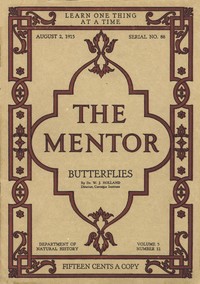
The Mentor: Butterflies, Vol. 3, Num. 12, Serial No. 88, August 2, 1915 by Holland
Let's be clear from the start: this isn't a novel. The Mentor: Butterflies is a single issue from a long-running educational magazine series. Published in August 1915, it landed on doorsteps while World War I raged in Europe. Inside, author William Jacob Holland, a respected director of the Carnegie Museum, offers a peaceful escape into the world of Lepidoptera.
The Story
There's no plot in the traditional sense. Instead, Holland acts as a guide. He walks the reader through the life cycle of a butterfly, from egg to caterpillar to chrysalis to winged adult. He explains how to tell butterflies apart from moths, describes some of North America's most common and spectacular species, and even gives tips on how to start a collection. The writing is direct and informative, meant for a curious public. The real stars are the accompanying images—beautiful color illustrations of butterflies that would have been a major selling point for subscribers in 1915.
Why You Should Read It
I loved this for its sense of time and place. Holland's voice is earnest and enthusiastic. He writes to share wonder, not just facts. You can feel his desire to make science accessible. Reading it today, it becomes a dual experience: you learn about butterflies, but you also learn about 1915. You see how people learned, what tools they had (like collecting nets and display cases), and what captivated them. It's a slow, thoughtful read. It won't thrill you with action, but it might make you look closer at the next butterfly in your garden.
Final Verdict
This is a niche read, but a rewarding one. It's perfect for history buffs who enjoy primary sources, naturalists curious about pre-modern science writing, or designers and artists who appreciate vintage printed materials. If you love the feel of old books and the idea of a quiet, educational journey, this volume is a preserved fragment of a bygone era of popular science. Just don't expect a sweeping narrative—expect a knowledgeable mentor, patiently giving a lesson from over a century ago.
This work has been identified as being free of known copyright restrictions. It serves as a testament to our shared literary heritage.
Christopher Jackson
10 months agoThe layout is perfect for tablet and e-reader devices.
Margaret Rodriguez
1 year agoAs a professional in this niche, the bibliography and references suggest a high level of research and authority. I'm glad I chose this over the other alternatives.