About 46 minutes
Hymen — A Reader’s Guide
Science Fiction Utopias
10,401 recorded words. 2 minutes difference from this book's estimate.
View Gutenberg source #28666
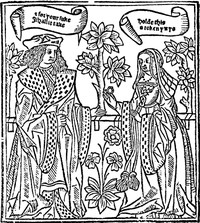
The catalog record for The cõforte of louers The Comfort of Lovers — Inside the Classic provides practical reading context through 10,944 words, 48 min estimated reading time, and 2 detected text sections.
The text analysis averages about 61.5 words per sentence, while the detected sections provide another way to judge how the source is divided.
Project Gutenberg metadata also associates the work with “Poetry,” connecting these edition facts with the source record’s subject description.
Explore this collection
These alternatives are selected using recorded categories and estimated reading time.
About 46 minutes
Science Fiction Utopias
10,401 recorded words. 2 minutes difference from this book's estimate.
View Gutenberg source #28666About 43 minutes
Science Fiction Utopias
9,806 recorded words. 5 minutes difference from this book's estimate.
View Gutenberg source #19937About 55 minutes
Science Fiction Utopias
12,601 recorded words. 7 minutes difference from this book's estimate.
View Gutenberg source #6670Search stored excerpts and compare books → Choose by your preferences →
Choices use stored catalog measurements. Estimates vary with reading speed. A shared category is a catalog label, not a claim that two books have the same argument or literary quality.
Search reads excerpt text stored with this catalog and links to its associated Gutenberg record. The connection is stored in the site database; this tool does not recheck that every excerpt is word-for-word identical to that external record. Excerpt search does not cover every chapter and does not verify historical publication dates.
Catalog snapshot checked: 2026-09-26. Coverage: 99 public books, 99 available source excerpts.
Calculated from edition completeness, EPUB availability, text structure and catalogue metadata. Not a user rating.
Total of 100 points, scaled to a 2.5-5.0 range. Editions with an empty description or a missing EPUB file are not scored.
Public-domain source text
The source text is kept in the dedicated reader, separate from this catalogue record and its commentary.
Stephen Hawes's The Comfort of Lovers opens with a prohemy that defends the use of 'cloudy figures' in poetry, asserting that 'gentyl poets' conceal truth under fable. The narrator then describes walking alone in a 'medowe grene' under a bright sun, lamenting his unrequited love. This dream-vision framework, common in late medieval poetry, is here used to stage a debate between the lover and his lady, who appears later in the poem. Hawes's diction is notably archaic even for his time, with spellings like 'cõforte' and 'cõstrue' reflecting early Tudor orthography.
The poem centers on three symbolic items—a flower, a sword, and a shield—which the narrator wins through fortune. The lady expresses surprise at his success, explaining that these objects were 'made to a meruaylous entente' in antiquity and that many knights had attempted but failed to obtain them. This suggests a chivalric allegory where the items represent virtues or rewards attainable only by the worthy. Hawes does not explicitly decode their meaning, leaving the reader to infer from the lady's words that the narrator's fortune is 'ordynate'—preordained. The vagueness of the allegory aligns with the prohemy's claim that poets 'cloke it subtylly.'
In a striking passage, the narrator compares his situation to a chess game: 'yf at the chesse I drawe / My selfe I knowe not / as a cheke frome a mate.' This metaphor underscores the lover's confusion and lack of control, as he cannot distinguish between a check (a threat) and a checkmate (defeat). The chess imagery is not extended beyond this single couplet, but it encapsulates the poem's theme of fortune's caprice. Hawes uses the game to convey the lover's helplessness, a contrast to the confident tone of the prohemy.
The lover's monologue is structured around anaphora and parallel clauses: 'The more my payne, the more my loue encreaseth / The more my Ieopardy, the truer is my harte.' This rhetorical pattern builds a sense of escalating passion and despair. Hawes also employs a refrain-like address to fortune and the lady, repeating 'O thou fayre fortune' and 'O ryght fayre lady.' Such repetition gives the complaint a liturgical quality, emphasizing the lover's fixation. The diction is hyperbolic—'my herte is colde and faynt,' 'my teeres dystyll'—but remains within the conventions of courtly love poetry.
In the prohemy, Hawes explicitly names his predecessors: 'Fyrst noble Gower / moralytees dyde endyte,' followed by Chaucer and Lydgate. He humbly disclaims expertise, calling himself 'no hystoryagraffe / nor poete laureate,' yet he asserts his desire to follow Lydgate's 'makynge.' This genealogy situates The Comfort of Lovers within a recognized English poetic tradition. Hawes also addresses his readers directly, asking them to correct his errors 'with all my delygence.' Such self-conscious framing reveals an author aware of his place in a literary lineage and anxious about his own skill.
Readers approaching The Comfort of Lovers should attend to the interplay between the prohemy's theoretical claims and the poem's actual practice. The 'cloudy figures' Hawes defends are not merely ornamental; they structure the narrative through allegory and metaphor. The poem rewards close attention to its rhetorical patterns and historical context, particularly the influence of Lydgate. As a short dream-vision, it offers a concentrated example of early Tudor poetic craft.
Reading Hawes’s chessboard of fortune, where every move feels preordained yet strangely personal, I found myself thinking of the quiet loyalty in The dog's book of verse — Themes and Context. Both speak of waiting and winning, though one stakes claims with swords, the other with a worn paw placed gently on a knee. Obscurity has its own soft patience.
Capture what you thought, learned, and would like to remember.