About 38 minutes
The Bridal of Pennacook Part 2 From Volume I of The Works of John Greenleaf Whittier — Context and Discussion
Science Fiction Utopias
8,689 recorded words. 1 minutes difference from this book's estimate.
View Gutenberg source #9561
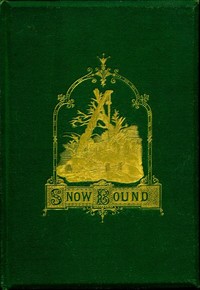
Snow-Bound A Winter Idyll — Reading Notes can be approached with a clearer sense of reading commitment from its source measurements: 8,294 words, 37 min estimated reading time, and 2 detected text sections.
The text analysis averages about 33.4 words per sentence, while the detected sections provide another way to judge how the source is divided.
Project Gutenberg metadata also associates the work with “Country life -- United States -- Poetry,” connecting these edition facts with the source record’s subject description.
Explore this collection
These alternatives are selected using recorded categories and estimated reading time.
About 38 minutes
Science Fiction Utopias
8,689 recorded words. 1 minutes difference from this book's estimate.
View Gutenberg source #9561About 43 minutes
Science Fiction Utopias
9,806 recorded words. 6 minutes difference from this book's estimate.
View Gutenberg source #19937About 29 minutes
Science Fiction Utopias
6,514 recorded words. 8 minutes difference from this book's estimate.
View Gutenberg source #9870Search stored excerpts and compare books → Choose by your preferences →
Choices use stored catalog measurements. Estimates vary with reading speed. A shared category is a catalog label, not a claim that two books have the same argument or literary quality.
Search reads excerpt text stored with this catalog and links to its associated Gutenberg record. The connection is stored in the site database; this tool does not recheck that every excerpt is word-for-word identical to that external record. Excerpt search does not cover every chapter and does not verify historical publication dates.
Catalog snapshot checked: 2026-09-26. Coverage: 99 public books, 99 available source excerpts.
Calculated from edition completeness, EPUB availability, text structure and catalogue metadata. Not a user rating.
Total of 100 points, scaled to a 2.5-5.0 range. Editions with an empty description or a missing EPUB file are not scored.
Public-domain source text
The source text is kept in the dedicated reader, separate from this catalogue record and its commentary.
John Greenleaf Whittier's Snow-Bound: A Winter Idyl, published in 1866 with illustrations by Harry Fenn, is cataloged under Science Fiction & Utopias—a classification that bears little relation to the poem's actual content. The excerpts reveal a meticulous, sensory account of a rural household snowed in for a night. Whittier describes the cold as 'a hard, dull bitterness of cold, / That checked, mid-vein, the circling race / Of life-blood in the sharpened face,' grounding the poem in physical experience rather than speculative fancy. The work's dedication 'To the Memory of the Household It Describes' signals its autobiographical roots, not futuristic invention.
The poem opens with chores: 'Brought in the wood from out of doors, / Littered the stalls, and from the mows / Raked down the herd's-grass for the cows.' These lines anchor the narrative in the rhythms of farm life. Whittier lingers on sounds—the horse whinnying, cattle shaking their 'walnut bows,' the cock's 'querulous challenge.' The storm itself is felt through the house: 'We heard the loosened clapboards tost, / The board-nails snapping in the frost; / And on us, through the unplastered wall, / Felt the light sifted snow-flakes fall.' Such details build a tangible environment, not a utopian abstraction.
Central to the poem is the hearth. Whittier quotes Cornelius Agrippa on wood fire driving away dark spirits, and Emerson's lines about the 'radiant fireplace.' The family sits 'Around the radiant fireplace, enclosed / In a tumultuous privacy of storm.' Later, the fire's decline marks time: 'At last the great logs, crumbling low, / Sent out a dull and duller glow.' The mother's prayer for 'food and shelter, warmth and health' ties the fire to gratitude. This domestic warmth contrasts with the 'bitter night' outside, yet the poem never proposes a perfect society—only a temporary, fragile comfort.
Whittier introduces a relative described as 'unrestful, bowed, and gray,' who 'watches under Eastern skies, / With hope each day renewed and fresh, / The Lord's quick coming in the flesh.' The poet refrains from judgment: 'The outward wayward life we see, / The hidden springs we may not know.' He muses on 'the tangled skein of will and fate' and concludes that only God 'remembereth we are dust.' This theological reflection, not science fiction, shapes the poem's worldview. The cataloging as Science Fiction & Utopias thus misrepresents a work rooted in memory, observation, and Christian humility.
Readers approaching Snow-Bound should set aside the Science Fiction label and attend to Whittier's precise rendering of a single night's storm and its aftermath. The poem rewards attention to its domestic rituals, natural imagery, and restrained moral reflections. Harry Fenn's illustrations, drawn from sketches made at the poem's locale, complement the text's fidelity to place. This edition offers a window into 19th-century rural life as remembered by a poet who valued the ordinary over the extraordinary.
There’s a particular ache in Snow-Bound—the way it lingers on a firelit room we’ll never enter again. I felt that same quiet warmth turning through A Little Book of Western Verse — Text and Context, where the landscape holds its own kind of homesickness. Neither book quite lets go of that season, that hush. It’s nice to keep such company nearby.
Capture what you thought, learned, and would like to remember.