About 29 minutes
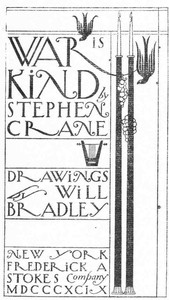
War is Kind — Background and Themes
Science Fiction Utopias
6,514 recorded words. 2 minutes difference from this book's estimate.
View Gutenberg source #9870
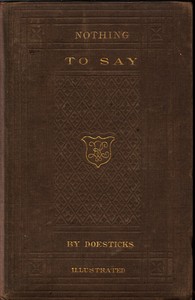
For Nothing to Say A Slight Slap at Mobocratic Snobbery, Which Has 'Nothing to Do' with 'Nothing to Wear' — Story, Setting & Ideas, the stored edition analysis reports 6,094 words, 27 min estimated reading time, and 1 detected text section.
The text analysis averages about 25.1 words per sentence, while the detected sections provide another way to judge how the source is divided.
Project Gutenberg metadata also associates the work with “Poetry,” connecting these edition facts with the source record’s subject description.
Explore this collection
These alternatives are selected using recorded categories and estimated reading time.
About 29 minutes
Science Fiction Utopias
6,514 recorded words. 2 minutes difference from this book's estimate.
View Gutenberg source #9870About 25 minutes
Science Fiction Utopias
5,729 recorded words. 2 minutes difference from this book's estimate.
View Gutenberg source #27473About 21 minutes
Science Fiction Utopias
4,793 recorded words. 6 minutes difference from this book's estimate.
View Gutenberg source #14706Search stored excerpts and compare books → Choose by your preferences →
Choices use stored catalog measurements. Estimates vary with reading speed. A shared category is a catalog label, not a claim that two books have the same argument or literary quality.
Search reads excerpt text stored with this catalog and links to its associated Gutenberg record. The connection is stored in the site database; this tool does not recheck that every excerpt is word-for-word identical to that external record. Excerpt search does not cover every chapter and does not verify historical publication dates.
Catalog snapshot checked: 2026-09-26. Coverage: 99 public books, 99 available source excerpts.
Calculated from edition completeness, EPUB availability, text structure and catalogue metadata. Not a user rating.
Total of 100 points, scaled to a 2.5-5.0 range. Editions with an empty description or a missing EPUB file are not scored.
Public-domain source text
The source text is kept in the dedicated reader, separate from this catalogue record and its commentary.
The poem opens with the speaker introducing himself as "Q. K. P. Doesticks, of No Hall, Nowhere," immediately establishing a mock-heroic persona. The subtitle promises "A Slight Slap at Mobocratic Snobbery," and the work delivers through a sustained dramatic scenario: a Spirit descends to interrogate the speaker about charitable giving, only to be met with evasive silence. The verse form—rhymed couplets with irregular meter—mimics the conversational tone of a theatrical monologue, while the speaker's self-deprecating asides ("Who didn't write 'Junius,' or 'Nothing to Wear'") anchor the satire in contemporary literary feuds.
The central device is a dialogue between the speaker and a Spirit who demands to know who has sent money to relieve the poor. The Spirit's questions grow increasingly pointed, contrasting the "wealthy, the rich, the opulent few / Of Madison Square and the Fifth Avenue" with the suffering masses. The speaker deflects, claiming ignorance. The Spirit's persistence reveals a moral framework: charity should be judged by its source, not its appearance. The poem's structure here mirrors a courtroom cross-examination, with the Spirit as prosecutor and the speaker as a reluctant witness.
Doesticks targets the fashionable set's performative charity. The Spirit sarcastically asks whether "Charity, really, not merely in fables, / May apparel herself in satins and sables." The poem's original subtitle references the popular satirical poem "Nothing to Wear" (1857), which mocked extravagant dress. Doesticks extends that critique: the wealthy may give money, but their motives are suspect. The speaker's repeated refrain "he'd Nothing to Say" becomes a punchline, suggesting that silence is the only honest response to such hypocrisy.
The speaker, Doesticks, adopts a buffoonish persona—"P.B." stands for "Perfect Brick," a slang term for a reliable fellow. He claims to live "No Castle, no Villa, no Place, Court, or Terrace," positioning himself outside the social hierarchy he mocks. The verse is peppered with theatrical asides and exaggerated self-deprecation, as when he protests he "never have visited" the fashionable addresses. This persona allows the poem to critique snobbery while appearing to be merely a humorous entertainment.
The poem concludes with a vision of a heavenly judgment where "Humbug and Cant yield to Truth and to Right." The speaker suggests that some from Fifth Avenue "Most nobly will speak in that great reckoning day, / While their earthly detractors have Nothing to Say." This twist reframes the title: the silence that seemed evasive becomes a verdict against the accusers. The poem thus ends not with a resolution but with a moral inversion, leaving the reader to decide who truly has nothing to say.
Readers should note that the poem's humor depends on familiarity with 1850s New York society and literary rivalries. The references to "Nothing to Wear" and the mock-epic style reward attention to detail. The work is best read aloud to catch its rhythmic shifts and ironic asides. Despite its slight length, the poem packs a layered critique of class and charity that remains sharp today.
That old poem about the spirit visiting those New York drawing rooms—it stayed with me long after, that quiet ache between what we say and what we do. It made me think of The Book of Joyous Children — Key Ideas to Explore, how its lightness holds a similar tenderness for what we overlook. Funny how the same heart finds both.
A brief reflection can help important ideas stay with you longer.