
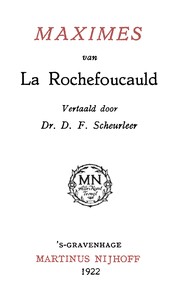
Maximes by François duc de La Rochefoucauld
Let's clear something up first: this isn't a novel. There's no hero's journey or sweeping romance. 'Maximes' is a series of 504 numbered observations, most just a sentence or two long. Written in the 1660s, it was La Rochefoucauld's project after a life filled with political intrigue, war, and romantic scandal in the French court. He'd seen it all—the grand speeches, the secret plots, the flattery—and he decided to write down what he really thought was motivating everyone.
The Story
There is no story in the traditional sense. Instead, picture a very perceptive man sitting in a quiet room, reflecting on a lifetime of watching people. He takes out his pen and starts writing truths as he sees them. One maxim might say, "We all have strength enough to endure the misfortunes of others." Another claims, "In the human heart, it is easier to extinguish a first love than to follow one." Each one is a self-contained thought, a polished gem of insight (or skepticism) about pride, love, honesty, and ambition. You can open it to any page and find something that makes you nod, wince, or argue out loud.
Why You Should Read It
I love this book because it's a mirror. It doesn't let anyone off the hook, especially not the reader. When La Rochefoucauld writes that "Our virtues are most often just vices in disguise," it forces you to check your own motives. Was that generous act truly selfless? His view can seem bleak, but I found it oddly freeing. By admitting that self-love is a primary driver, it takes the pressure off pretending we're always noble. It's also incredibly witty. The writing is so precise and clean that even the toughest pills to swallow go down smoothly. This isn't grumpy philosophy; it's sharp, elegant, and often funny in a dry, knowing way.
Final Verdict
This book is perfect for anyone who loves psychology, sharp writing, or just a good reality check. If you enjoy authors like Mark Manson or the clear-eyed observations in a show like Succession, you'll find a kindred spirit in this 17th-century duke. It's also great for busy people—you can read just five maxims with your morning coffee and have food for thought all day. Fair warning: it might make you a bit more suspicious of grand gestures, including your own. But it will also make you a much better observer of the human comedy.
This content is free to share and distribute. It serves as a testament to our shared literary heritage.
Linda Davis
2 months agoMy first impression was quite positive because the step-by-step breakdown of the methodology is extremely helpful for students. The price-to-value ratio here is simply unbeatable.
Mary Martin
11 months agoInitially, I was looking for a specific answer, but the critical analysis of current industry standards is very timely. An excellent example of how quality digital books should be formatted.
Robert Miller
1 year agoThe layout of the digital version made it easy to start immediately, the insights into future trends are particularly thought-provoking. This is a solid reference for both beginners and experts.
William Williams
1 year agoThe peer-reviewed feel of this content gives me great confidence.

Emily Lee
2 months agoComparing this to other titles in the same genre, the insights into future trends are particularly thought-provoking. Well worth the time invested in reading it.