About 106 minutes
The dog's book of verse — Themes and Context
Science Fiction Utopias
24,210 recorded words. 3 minutes difference from this book's estimate.
View Gutenberg source #19226
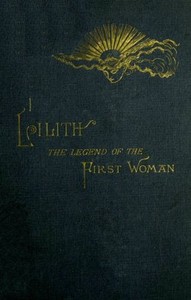
Lilith — Context and Discussion can be approached with a clearer sense of reading commitment from its source measurements: 23,625 words, 1 hr 43 min estimated reading time, and 4 detected text sections.
The text analysis averages about 13.8 words per sentence, while the detected sections provide another way to judge how the source is divided.
Project Gutenberg metadata also associates the work with “American poetry,” connecting these edition facts with the source record’s subject description.
Explore this collection
These alternatives are selected using recorded categories and estimated reading time.
About 106 minutes
Science Fiction Utopias
24,210 recorded words. 3 minutes difference from this book's estimate.
View Gutenberg source #19226About 79 minutes
Science Fiction Utopias
18,003 recorded words. 24 minutes difference from this book's estimate.
View Gutenberg source #8801About 71 minutes
Science Fiction Utopias
16,152 recorded words. 32 minutes difference from this book's estimate.
View Gutenberg source #25426Search stored excerpts and compare books → Choose by your preferences →
Choices use stored catalog measurements. Estimates vary with reading speed. A shared category is a catalog label, not a claim that two books have the same argument or literary quality.
Search reads excerpt text stored with this catalog and links to its associated Gutenberg record. The connection is stored in the site database; this tool does not recheck that every excerpt is word-for-word identical to that external record. Excerpt search does not cover every chapter and does not verify historical publication dates.
Catalog snapshot checked: 2026-09-26. Coverage: 99 public books, 99 available source excerpts.
Calculated from edition completeness, EPUB availability, text structure and catalogue metadata. Not a user rating.
Total of 100 points, scaled to a 2.5-5.0 range. Editions with an empty description or a missing EPUB file are not scored.
Public-domain source text
The source text is kept in the dedicated reader, separate from this catalogue record and its commentary.
Collier's preface immediately distinguishes her Lilith from the demonic spectre of medieval folklore. She writes that she has 'not drawn Lilith as there represented—the bloodthirsty sovereign' but instead 'transferred to the more beautiful shadow-world' of poetry. This framing primes readers for a sympathetic, mournful figure rather than a child-killing monster. The poem itself opens with Lilith already exiled, speaking to Eblis, prince of devils, as they observe Eve nursing a child—a sight that provokes Lilith's anguished cry: 'I shall not know such joy.'
The earliest excerpt places Lilith in a 'dark realm of night' with Eblis, yet her speech is not demonic but desolate. She curses Eve and Adam, but her complaint is specifically maternal: 'No babe shall come!' The poem's setting—a 'shadow-world' that Collier calls 'the abode of poets themselves'—is established as a liminal space of longing. Readers should note how Lilith's voice carries the poem's emotional weight; she is not a villain but a bereft observer. The preface's claim that she retains 'the humanizing element' is borne out in her jealousy, which feels personal rather than mythic.
After Lilith's departure, the poem shifts to Adam's perspective in Eden. The natural world mirrors his sorrow: 'Bloomless the days, the nights bowed down with care.' Collier uses repeated auditory details—the wood-dove's 'plaintive moan,' the winds 'among the scented glades'—to create a soundscape of absence. Adam hears Eden itself sigh 'Never-more!' This section demonstrates Collier's technique of projecting emotion onto landscape, a device that recurs throughout. The pacing is slow, almost static, as Adam 'pondered on blue peaks remote,' emphasizing his paralysis without Lilith.
When Eve appears, Collier contrasts her sharply with Lilith. Eve's description is soft and diminutive: 'Less red the dart / That deepest cleaves the folded rose's heart, / Than her round cheeks.' Her hair is 'like vagrant tendrils,' her hands 'quaintly crossed.' The poem explicitly compares the two women: 'Not hers the regal air / Of Lilith lost, the white arms, lissom, bare.' Eve is domestic, gentle, and unassuming—'soft, as through / Some pleasant dream.' This juxtaposition suggests that Lilith's tragedy is not just exile but replacement by a milder, more acceptable wife. The narrative voice remains neutral, letting the contrast speak.
The final excerpt returns to Lilith watching Eve with her baby. The scene is voyeuristic: 'See how the babe, scarce waking, doth caress / The mother!' Lilith's curse—'Accurséd may she be'—is directed at Eve, but her true anguish is the child she will never hold. Collier refrains from making Lilith act on her jealousy; instead, she 'trembling, she brake off' and retreats with Eblis. The poem leaves open whether Lilith will become the child-killing spectre of legend or remain a figure of pathos. Readers should attend to how the poem withholds resolution, ending on Lilith's unanswered question: 'What name she bears, who dwells in Eden now?'
Collier's Lilith is best approached as a character study in exile and envy, not as a plot-driven narrative. The poem's strength lies in its atmospheric verse and psychological portraiture. Readers may find it useful to track recurring motifs—light and shadow, sound and silence, the contrast between Lilith's 'regal air' and Eve's softness—as they shape the poem's central tension. The preface's disclaimer about diverging from tradition invites a reading that treats Lilith's humanity as the poem's core experiment.
There is a particular ache in Collier’s Lilith—the way she watches Eve hold a child, and feels the world tip sideways. It reminded me, inexplicably, of leafing through A Little Book of Western Verse — Text and Context on a rainy afternoon, where the quiet verses seemed to hold the same shadow of unfulfilled longing, but softened somehow, as if heard through a closed door.
A brief reflection can help important ideas stay with you longer.